
Food Truck insurance made simple

Fast Quotes. Trusted Coverage. Call (888) 973-0016

A food truck is not a car and it is not a restaurant. It is both at the same time, which is exactly why standard auto insurance and standard business insurance both fall short on their own. The vehicle risk and the business risk exist simultaneously and need to be covered simultaneously.

Farmer Brown Insurance has been placing food truck insurance for mobile food operators across all 50 states since 1996. We work with A-rated carriers and, in most cases, have certificates issued the same day.

Why food truck insurance is unique

A food truck owner driving from a lunch spot to a dinner location in the same day is operating a commercial vehicle, running a restaurant kitchen, serving customers, and potentially employing staff all at once. Each of those activities carries its own liability exposure.

Consider these real-world scenarios:

The Late-Night Taco Truck

Operating until 2 AM in downtown areas increases both vehicle and liability risks. Drunk customers, challenging parking situations, and late-night driving all elevate your insurance needs.

The Festival Circuit Food Truck

Traveling between states for events means navigating different regulations, road conditions, and liability requirements in each location.

The High-End Gourmet Truck

Expensive equipment like wood-fired ovens or specialty refrigeration systems requires coverage limits that basic policies don’t provide.
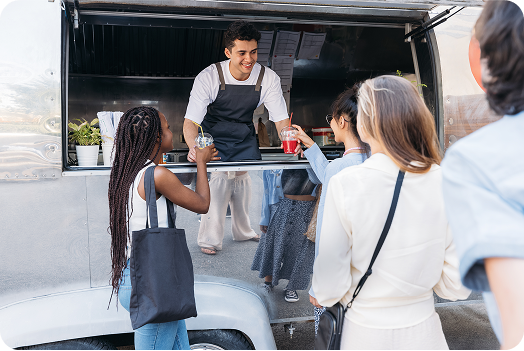
Standard commercial auto insurance covers the vehicle while it is moving. It does not cover a customer who gets sick from your food, a slip and fall near your service window, or kitchen equipment stolen overnight. Standard general liability covers the business operations but does not cover the vehicle itself. Food truck insurance is the combination of both, structured for an operation that moves.

What affects your food truck insurance cost

Several factors directly impact your premium costs, and understanding them helps you get better rates:

Driver related factors

  • Age and experience: Younger drivers or those new to commercial driving pay higher premiums
  • Driving record: Clean records earn significant discounts, while violations increase costs
  • Commercial driving experience: Background operating large vehicles reduces rates

Vehicle specifications

  • Truck size and weight: Larger vehicles cost more to insure due to increased damage potential
  • Stated value: Food trucks range from $20,000 basic setups to $250,000+ custom builds
  • Equipment value: High-end kitchen equipment requires higher coverage limits

Operational details

  • Storage location: Secure garages cost less than street parking overnight
  • Hours of operation: Late-night service increases accident and liability risks builds
  • Service areas: Urban locations with heavy traffic cost more than suburban routes
  • Seasonal vs. year-round: Consistent operation often qualifies for better rates

Geographic considerations

  • State regulations: Some states require higher minimum coverage limits
  • City requirements: Urban areas may mandate additional liability coverage
  • Weather patterns: Areas with severe weather increase comprehensive claim risks

What type of insurance does a food truck need?

Running a food truck is more than just cooking great food; you’re managing a full restaurant on wheels. That means you need the right insurance to protect everything you’ve worked so hard to build. Here’s what to consider.

General liability insurance

Covers third-party claims that arise when your truck is parked and serving customers. A customer who gets sick from your food, someone who slips near your service window, or a claim that your operation damaged nearby property. These claims have nothing to do with the vehicle and fall entirely outside your commercial auto policy. Both policies are necessary. They cover different exposures that happen in the same location at the same time.

Food truck serving customers at an outdoor location.

It protects you if:

Someone gets sick after eating your food

A customer slips and falls near your truck

You accidentally damage someone else’s property while operating
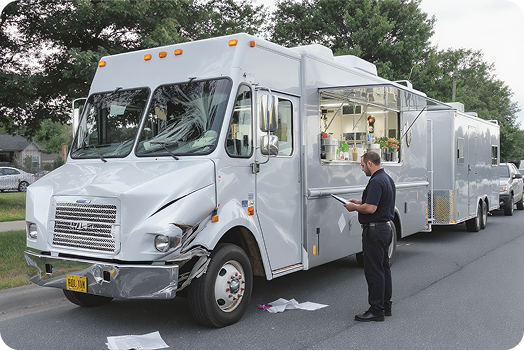
Covers the truck itself while in operation: collision damage, theft, vandalism, fire, and liability for accidents where you are at fault. If your food truck is a trailer pulled by a separate vehicle, the tow vehicle needs its own commercial auto policy and the trailer requires a separate endorsement. A personal auto policy will not cover either one while being used for business.

llustration of a commercial vehicle representing coverage provided by commercial auto insurance.

Commercial Auto Insurance essential for food trucks that operate on the road:

Covers damage to the truck and permanently attached equipment

Towing vehicle needs its own commercial policy

Trailer requires separate coverage
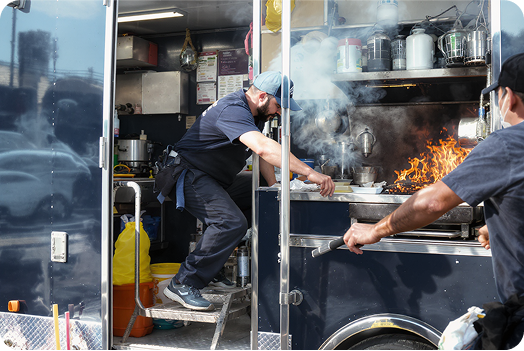
If you have employees, workers compensation is required in every state except Texas. Food truck employees face risks from both sides of the operation: burns and cuts from kitchen work, and injuries related to driving and setting up in different locations. Workers compensation covers medical expenses, lost wages, and rehabilitation when an employee is hurt on the job.

Workers' Compensation for Mobile Employees

Commercial Auto Insurance essential for food trucks that operate on the road:

Cooking or operating equipment

Driving the truck

Working in confined or hazardous spaces

Serving customers in various locations
Benefits Include: Medical Care, Lost Wages, Rehabilitation, Death Benefits

Comprehensive coverage

Covers non-collision damage to the truck: hail, storm damage, vandalism, and theft. In urban markets where food trucks park in exposed locations overnight, comprehensive coverage is not optional.

Comprehensive Insurance Covers non-collision-related damage, such as:

Vandalism or theft

Hail and storm damage

Passenger-related damage
Benefits Include: Medical Care, Lost Wages, Rehabilitation, Death Benefits

Business Owner’s Policy (BOP)

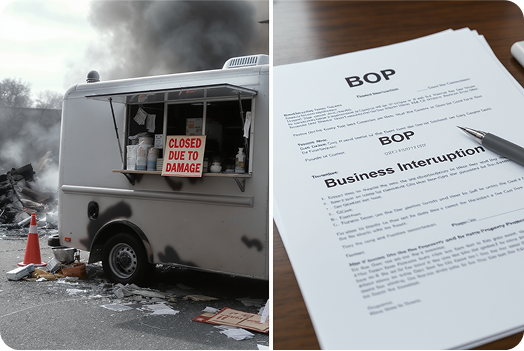
A BOP combines general liability and commercial property coverage into a single policy at a lower total cost than buying each separately. Most BOPs also include business interruption coverage, which replaces lost income if a covered event forces the operation to shut down temporarily. A kitchen fire that takes two weeks to repair, equipment damage from a storm, or a vandalism event that makes the truck unusable can all trigger business interruption. For food truck operators whose entire revenue depends on that single unit being operational, this coverage matters.

Food truck closed with a sign due to damage, illustrating the need for insurance coverage.

Business Owner’s Policy (BOP) A bundled policy that typically includes:

General Liability

Property Insurance

Property Insurance

Typical food truck insurance coverage requirements

Most food truck operations need these essential coverages:

Coverage TypeTypical LimitsPurpose
General Liability$1M Combined Single LimitCustomer injuries, property damage
Commercial Auto Liability$1M minimumVehicle accident protection
Comprehensive & CollisionActual cash valuePhysical damage to truck
Uninsured/Underinsured Motorist$1M recommendedProtection from uninsured drivers
Medical Payments$5,000 per personImmediate medical costs
Workers’ CompensationState minimumsEmployee injury coverage
Equipment CoverageReplacement costKitchen and business equipment
Business Interruption12 months incomeLost revenue during repairs

Common deductible ranges

  • Comprehensive: $1,000 to $2,500
  • Collision: $1,000 to $2,500
  • Equipment: $500 to $1,000
  • General Liability: Usually no deductible

Additional valuable coverages

  • Towing and Labor
  • Rental Reimbursement
  • Spoilage Coverage
  • Cyber Liability

What we need to quote your food truck insurance

Getting an accurate quote requires specific information about your operation. Having these details ready speeds up the process:

Driver information

  • Valid driver’s license for all operators
  • Driving records for the past 5 years
  • Commercial driving experience
  • Any additional driver certifications

Vehicle details

  • VIN number of the food truck
  • Year, make, and model
  • Current stated value or purchase price
  • Any modifications or custom equipment

Business operations

  • Types of food served
  • Operating hours and days
  • Service locations and radius
  • Annual revenue projections
  • Number of employees

Current coverage

  • Existing insurance policies
  • Claims history for past 5 years
  • Previous coverage limits
  • Any coverage gaps or issues

What to know about general liability insurance and insurance costs

General liability insurance is one of the most important and most misunderstood coverages for food truck owners.

Cost-wise, your premium will depend on:

Where you operate

How often you serve

What kind of food you offer

Whether you attend high-risk events (like festivals or late-night service)

It’s typically more affordable when bundled with other coverages, like in a Business Owner’s Policy (BOP).

How liability insurance works with your truck insurance

It’s easy to think general liability and truck insurance are the same, but they cover completely different risks.

Commercial auto insurance

Commercial auto insurance protects you while you’re driving the truck, things like accidents, fender benders, and vehicle damage.

General liability insurance

General liability insurance protects you when you’re parked and open for business, like if someone slips near your setup or gets sick from your food.

Both are essential to fully protect your food truck operation, one covers your wheels, the other covers your workspace.

Why commercial auto coverage matters for your truck business

Your food truck isn’t just a vehicle, it’s your livelihood. That’s why commercial auto insurance is non-negotiable.

Damage to your truck

Attached kitchen equipment

Injuries from accidents while driving

Liability for accidents you cause
If you’re using a trailer, your personal auto policy likely won’t cover it. You’ll need a separate commercial policy for the towing vehicle and an endorsement to protect the trailer itself.

contractor insurance ebook

Want to know everything about Contractors Insurance with updated information?

This E-book is for you!

Do you still have some questions?

Find us FarmerBrown Insurance icon

Find us NOW!

We are located in 21750 Hardy Oak Blvd Ste. San Antonio, TX, 78258

Frequently Asked Questions icon

Frequently Asked Questions

A place where you can find all the answers

Talk With An Agent Now icon

Talk With An Agent Now

Let’s figure out how we can help you