What are surety bonds?
If you found this page, you likely have questions about Surety Bonds. This is a generic term. It is very similar to someone asking you for insurance. Surety Bonds are very specific in almost all instances. They allow you to pull a permit in a specific City, or allow you perfom licensed trades in a State or locality.
Other types of bonds, known as bid bonds, allow you to bid on certain government contracts. This is done with the goal of being the low bidder and being awarded the contract, which requires Payment and Performance bonds.
Regardless of the type of Surety Bond you need, FarmerBrown.com can help.
At FarmerBrown.com we concentrate on providing low-cost surety bonds required by the construction industry and other commercial businesses. 95% of Surety bonds for the construction industry fall into the four categories listed below.
Get your instant online surety bond quote
"*" indicates required fields
Types of surety bonds
License and permit bonds
These Surety Bonds are required by a governmental entity. They are broken down into two categories. The first is a Surety Bond required for licensing or registration. These bond amounts range from $5,000 to $25,000. License and Permit Bonds are inexpensive, typically ranging in price from $100 to $250 in most cases. We can issue these bonds and deliver them to you in minutes. No more wasted time waiting for the proper forms.
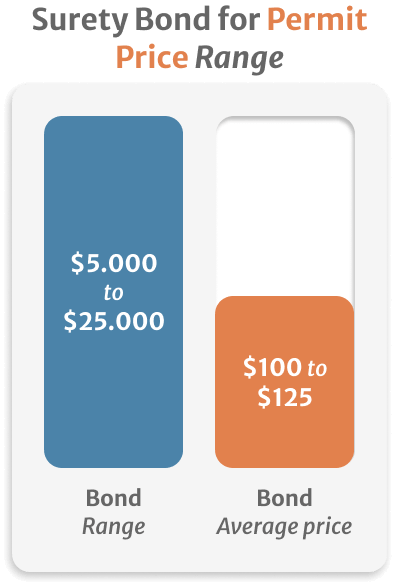
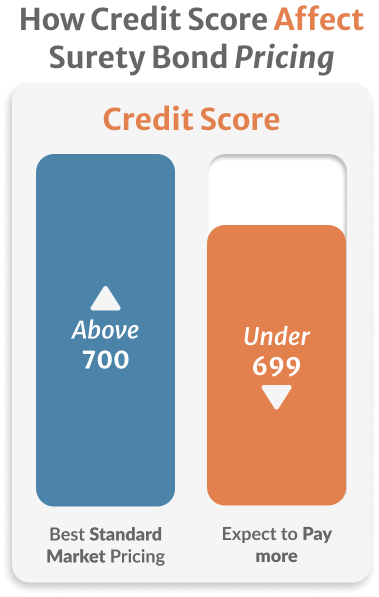
They are easily obtained and can usually be emailed directly to you in a matter of minutes. In a few states such as Arizona, California and Washington a credit check must be run for the Surety Bond to be issued. The credit score required to obtain the best standard market pricing is 700 or above. If your credit isn’t great, expect to pay a lot more. There is no need to worry as it a soft inquiry of your credit report that does not affect your credit score.
For example if you needed the WA $30,000 contractor bond and had good credit the bond would cost less than $200. If you have bad credit you could pay over $3,000.
The other type of Surety Bond is one to get a permit from a City to do a job. These again range from $5,000 to $25,000 Permit bonds are easy to get and range from $100 to $125 in most cases.
All these types of bonds can be issued within minutes once all the proper information has been received.
There is generally no credit check and the bond can be sent to you almost immediately. We just need to know the type of contractor you are registering as such as a plumber, roofer, electrician, or general contractor. It is important to know that there is no blanket Surety Bond that you can buy that covers all the different Cities. You have to purchase a bond for each City. If you are in Ohio almost every City requires that the bond has a raised seal, as a result, these bonds must either be sent regular mail or express delivery if need the next day.
Bid bonds
The next main type of Surety Bonds is bid bonds.
These Surety Bonds are required in many instances when you are bidding on large jobs. They ensure a winning contractor will sign the contract as outlined in the bid. It also ensures that the required performance and payment bonds will be issued at the price stated in the bid. These bonds require good credit (above 700). Larger bids also require financial statements. These statements must include both personal and business financials.
To obtain a bid bond, you must have been in business for at least a year, have prior experience with the type of work, and have completed projects of a similar size. The bid bond gives the owner of the project the peace of mind that the bidder has had his financial and work history vetted by a third party, the surety company. It also has a penalty amount that will be forfeited to the owner should you not sign the contract if you are the low bidder. As a side note, a surety company will not issue you a bid bond if they will not issue you a Payment and Performance bond if you are the low bidder. At FarmerBrown.Com we do not charge for bid bonds. We can issue these bonds within 24 hours or less of a completed application.
Payment and performance bonds
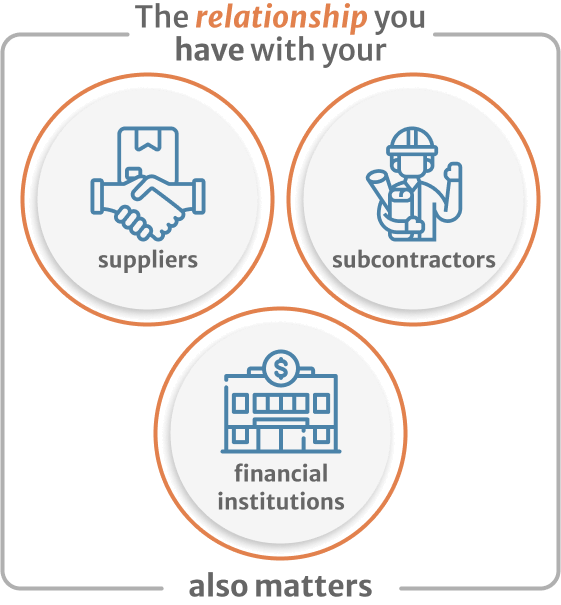
The last main category of Surety Bonds is Payment and Performance Bonds. While they are two separate bonds, these two types of Surety Bonds go together like salt and pepper. The payment bond is a guarantee to the owner that all suppliers and subcontractors who worked on the job or provided materials are paid. The performance bond guarantees that you will complete the job. If you abandon the project or are dragging your heels, the project owner may contact the surety company and have them obtain contractors to complete the work. It is important to realize that Surety Bonds differ from insurance. With insurance you only pay a deductible and the insurance company covers the rest. If a Surety Company pays out on a bond claim they will attempt to collect any money they paid out from you.
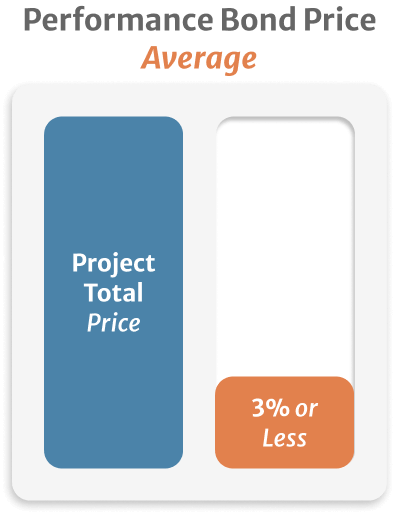
These Surety Bonds cost about 3% of the total contract price unless the jobs are over a million dollars where the rate would be lower.
How can contractors improve their bonding capacity?
1. Increase your capital
Capital is an essential consideration when assessing your bonding capacity. A surety company will be interested in knowing whether you have the financial ability to complete the project as desired. Several tests and ratio calculations are usually performed to determine this. It is therefore advisable to ensure you have sufficient capital, especially working capital. Working capital is the difference between current assets and current liabilities. It shows your organization’s capability to meet current operational obligations. In the simplest terms the more cash you can show the easier it is to get bonded.
2. Have a plan for slow and steady growth
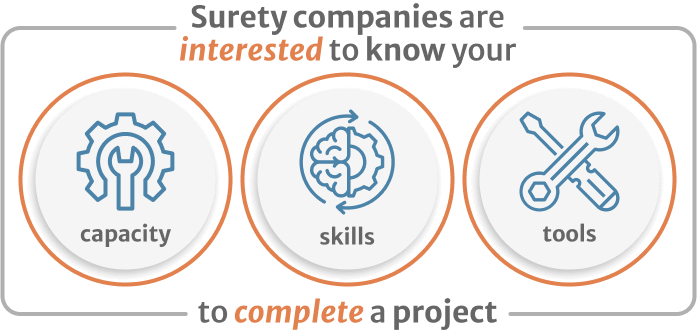
Surety companies are also interested in your past work history, specifically regarding your capacity, skills, and tools to complete the project you plan to undertake. They specifically want to know if you have the capacity, skills, and tools to complete the project you are planning to take on. As a rule you will need to have completed a job of a similar dollar size in the past. A good rule is that the current job you would like to take on should be around 150% or less of the largest job you have completed previously. For example, if your largest project was $1 million, you would be able to bid on projects around $1.5 Million. If you wanted to bid $3 million you would have to show extreme mitigating factors to obtain a bid that size, An explanation that you will make a lot of money will not be sufficient. They will also want to know if you have the right personnel and experience for the project.
3. Keep your Personal credit score up!
The most important factor in obtaining bonds is the personal credit of the business owners. This is the first hurdle every surety company examines. If your credit score is below 700 it is nearly impossible to get payment and performance bonds of any size. You need to monitor your credit score closely.
One of the biggest mistakes we see smaller business owners make is using their personal credit cards to finance and operate the business. This can be a critical mistake if you have an upcoming bid and your balances are high because you just made business purchases. Credit is run by surety and your account may no longer qualify for bid bonds or might only qualify for much lower amounts.
We suggest that you endeavour to obtain credit in the name of the business. Most large credit card companies offer business accounts. As these are based on the business accounts, they do not affect your personal credit score.
4. Use a company that specializes in bonds
Relying on a local agent who handles bonds only once or twice a year is a risky proposition for your business. Bid deadlines are strict. If you need a bid bond or a payment and performance bond quickly, any delay means losing the job. An agent unfamiliar with the process can inadvertently cause delays with simple mistakes and overlooked items. FarmerBrown.com has streamlined procedures and deep industry connections, allowing us to secure bonds for you in a matter of hours in many instances.
We have the knowledge to present your situation to convince underwriters to allow higher limits, allowing you to bid on larger, more profitable jobs.
Using our expertise can get you the largest bond capacity possible, thereby accelerating your company’s growth.
Why use FarmerBrown.com to get your surety bonds?
We have a greater understanding of the Surety Bonding process than most local agents. They may only write one or two bonds a year. Over 80% of our business comes from clients that were dissatisfied with their local agent. Keep in mind that once an application is submitted with wrong information it is almost impossible to change it. Do not go through the headaches of using inexperienced agents to get your Surety Bonds. It is your business and livelihood use the best the first time around.
- Dedicated experts who only write bonds.
- Fast Turn around times in most cases in less than 24 hours from submitting a complete application.
- We have direct access to underwriters to get you the bonds you need.
- We are available to answer any questions or concerns you may have.
- Over 20 years of experience in the Surety Industry.
- All our Surety Companies are Treasury listed and acceptable to all owners.
These are the basics of Surety Bonds but there is a great deal more to know when setting them up. If you have any questions you can always contact us. One of the best ways to grow your business is to have the ability to work on all types of projects that require Surety Bonds.

If you wish to know more, please call (888) 973-0016 to talk with our expert.
What is the difference between surety bonds and insurance?
The major difference between Surety Bonds and insurance is what happens when there is a claim.
If you are in an accident and there is a covered claim you are only responsible to pay your deductible.
The Insurance company will pay the remainder of the claim up to the policy limits.
Surety Bonds are different. If there is a claim on the Surety Bond, and the Surety company pays out on the claim, they will come after you to repay them any amounts they paid out as a result of the claim.
Get the E-Book
Everything you need to know about Insurance is here, in one place. Get the Insurance Ebook Now.
Do you still have some questions?

Find us NOW!
We are located in 21750 Hardy Oak Blvd Ste. San Antonio, TX, 78258

Frequently Asked Questions
A place where you can find all the answers

Talk With An Agent Now
Let’s figure out how we can help you