
Hotel Insurance
Protecting Every Guest's Dream Stay
Hotel insurance for hospitality businesses
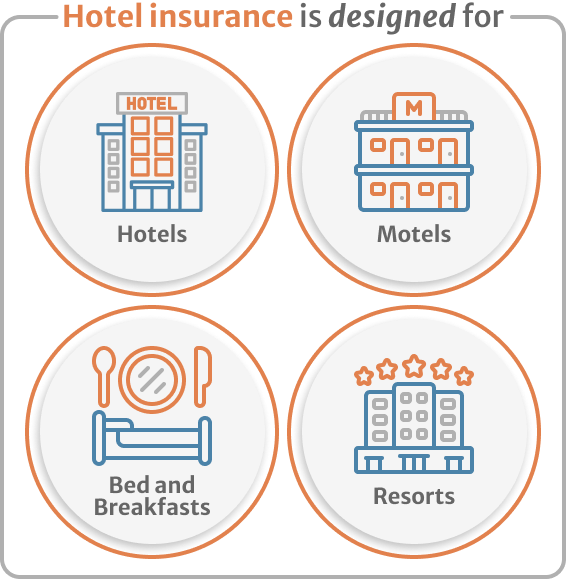
Hotels, motels, bed and breakfasts, and resorts carry a combination of risks that most commercial insurance programs are not built to handle. You are running a property operation, a food service operation, an employer with a large hourly workforce, and in many cases a transportation service and a bar, all under one roof.
A guest who slips by the pool files a lawsuit. An employee burns their hand in the kitchen and cannot work for six weeks. Those two events happen on hotel properties every day and each one alone can cost more than a year of premiums. Add a shuttle accident on the way to the airport or a foodborne illness claim from the restaurant and you are managing four different liability exposures simultaneously from a single property.
Farmer Brown Insurance places hotel insurance for properties of all sizes across all 50 states. We work with A-rated carriers and get certificates issued the same day in most cases.
What hotel insurance covers
Hotel insurance is not a single policy. It is a program of policies built around the specific operations of the property. The combination varies by property type, size, and services offered. Independently owned hotels and flagged properties under a franchise agreement both need coverage built around their actual operations, not a generic commercial package.
"*" indicates required fields
Types of hotel insurance coverage
Hotel insurance is not a one-size-fits-all solution. Different hotels have different needs, and insurance policies should be tailored to address the specific risks associated with each property. Here are some of the common types of hotel insurance coverage available:
Property insurance for hotels
Property insurance covers the hotel’s physical assets against fire, theft, vandalism, equipment breakdown, and certain natural disasters. Standard property forms typically exclude flood and earthquake. Properties in coastal zones, flood plains, or seismic areas need separate endorsements or standalone policies for those specific perils.
| Coverage Component | What It Covers |
|---|---|
| Building structure | Damage from fire, storm, vandalism |
| Contents | Furniture, fixtures, linens, kitchen equipment, electronics |
| Equipment breakdown | Boiler failure, HVAC malfunction, elevator breakdown |
| Business interruption | Lost revenue and fixed expenses during a covered closure |
| Debris removal | Cost of clearing debris after a covered event |
| Ordinance and law | Additional cost of bringing repairs up to current building code |
Equipment breakdown is one of the most frequently overlooked endorsements in hotel property policies. An HVAC system that fails in July, an elevator that goes out of service during a busy weekend, or a commercial refrigeration system that stops overnight can each generate guest complaints, property damage, and food spoilage losses that a standard property policy will not cover without a specific endorsement.
Business interruption coverage matters more in hotels than in most other businesses. A hotel that closes for two weeks because of a fire does not just lose the repair cost. It loses two weeks of room revenue, food and beverage revenue, and event bookings while debt service, payroll, and utilities keep running.
2026 property insurance cost estimates by property type:
| Property Type | Estimated Annual Premium |
|---|---|
| Small boutique hotel or B&B (under 30 rooms) | $1,500 to $5,000 |
| Mid-sized hotel (30 to 100 rooms) | $8,000 to $30,000 |
| Large or full-service hotel (100+ rooms) | $30,000 to $100,000+ |
| Luxury resort with extensive amenities | $75,000 to $250,000+ |
Location, property value, construction type, fire suppression systems, and claims history all move the number.
General liability for hotel insurance
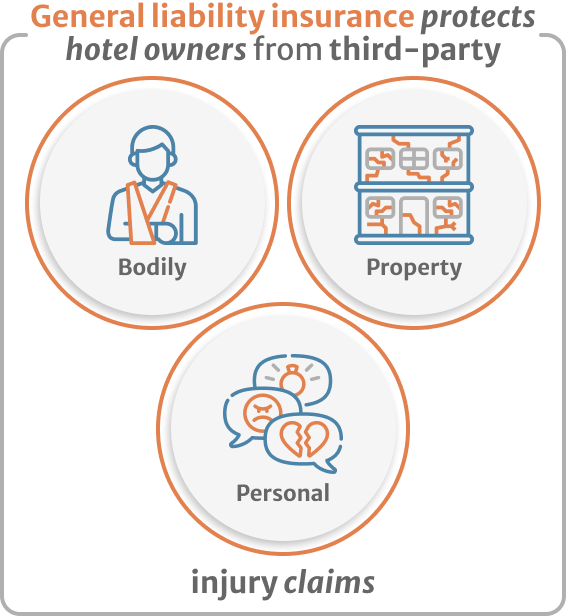
General liability covers third-party claims for bodily injury, property damage, and personal and advertising injury. For a hotel, this is the foundation of the program and the policy most likely to be tested.
A guest who slips on a wet lobby floor. A child who falls near the pool. A visitor who claims food from the hotel restaurant caused an illness. These are not hypothetical risks. They are the most common claims in the hospitality industry, and they happen regularly on properties that have done nothing wrong. General liability covers the medical bills, the legal fees, and any settlement that follows.
| Coverage Component | What It Covers |
|---|---|
| Bodily injury | Guest, visitor, or vendor injuries on the property |
| Property damage | Damage caused by hotel operations or employees |
| Personal and advertising injury | Libel, slander, copyright infringement |
| Products liability | Food illness claims from the restaurant or bar |
| Legal defense | Attorney fees for covered claims regardless of merit |
Most hotel franchise agreements and commercial lenders require proof of general liability before the property can operate. Standard limits for a mid-sized hotel are $1,000,000 per occurrence and $2,000,000 aggregate. Larger properties and those in high-litigation markets like New York and California frequently carry $5,000,000 or more through a combination of primary and umbrella coverage.
Commercial auto for hotel insurance
Hotels that offer shuttle services, limousine transfers, valet parking, or any other transportation service need commercial auto insurance. Personal auto insurance does not cover vehicles operated for business purposes and will deny claims that arise during business use.
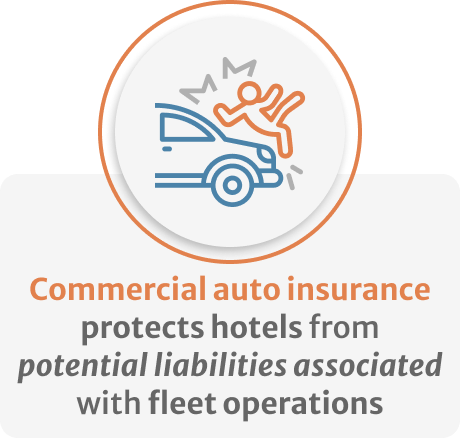
Key Aspects of Commercial Auto Insurance for Hotels:
Breadth of Coverage:
Collision
Covers damage to the hotel-owned vehicle from accidents, regardless of fault.
Comprehensive
Protects against damage from non-collision events, such as theft, vandalism, or natural disasters.
Liability
Should the hotel’s vehicle cause harm or property damage, this covers the potential legal liabilities.
Medical payments
In case of an accident, this covers medical bills for the injured passengers or driver of the hotel’s vehicle.
Uninsured/underinsured motorist
Protects the hotel if its vehicle is involved in an accident with a driver who doesn’t have adequate insurance coverage.
For hotels that offer transportation services, be it a shuttle to the local airport or a limousine service for guests, Commercial Auto Insurance becomes indispensable. Here’s a breakdown of the potential costs:
| Small Shuttle Services | If the hotel offers a small shuttle service for guests, premiums could range from $1,500 to $5,000 annually per vehicle. |
| Limousine or Luxury Vehicle Services | Upscale services with luxury vehicles might see premiums from $3,500 to $10,000 or more annually per vehicle. |
| Large Shuttle Buses or Vans | Hotels providing larger shuttle services can expect to pay between $7,000 and $20,000 per vehicle annually. |
Premium Considerations:
- Nature and frequency of use
- Type and number of vehicles
- Driver records
- Safety measures
Valet operations create a separate exposure that commercial auto alone does not cover. When a guest’s vehicle is damaged or stolen while under the hotel’s care, that claim falls on the hotel. Valet liability insurance covers damage to guest vehicles, theft from the lot, and personal belongings lost or damaged while the vehicle is in the hotel’s custody. Valet liability typically runs between $5,000 and $15,000 per year depending on volume and location.
Additional policies
In the dynamic world of hotel operations, ensuring guests have a memorable and seamless experience is paramount. From dining at hotel restaurants to enjoying a cocktail at the bar, and entrusting their vehicles to hotel valets, guests expect top-notch service across all facets. However, these services come with their unique sets of risks. Combining food, liquor, and valet insurance provides hotels with a comprehensive shield against potential liabilities.
Food liability insurance:
Protection from illness claims
Should a guest fall ill due to food consumed at the hotel, this coverage handles medical costs and potential legal fees.
Spoilage coverage
In case of power outages or equipment failures, any loss incurred from spoiled food stocks is covered.
| Food Insurance Premium Considerations for Hotels | |
| Scale of Operations | Past Claims History |
| Safety and Hygiene Standards | Supplier Vetting |
Liquor liability insurance:
Protection from over-serving
Hotels could be held liable if an intoxicated guest causes harm or property damage. This insurance covers legal fees, settlements, and medical costs.
Defense coverage
In the face of a lawsuit, the insurance assists with defense costs, even if the claims are groundless.
| Liquor Liability Insurance Premium Considerations for Hotels | |
| Volume of Alcohol Sales | Training Programs |
| Past Incidents | Hours of Operation |
Valet liability insurance:
Protection against vehicle damage
Any damages to guests’ vehicles under the hotel’s care, from minor scratches to significant collisions, are covered.
Protection against vehicle theft
In the rare event a vehicle is stolen under the hotel’s watch, this coverage assists with the financial implications.
Guests’ personal belongings
Items lost or damaged inside the vehicles while being parked or retrieved are also protected under this coverage.
| Valet Liability Insurance Premium Considerations for Hotels | |
| Volume of Vehicles | |
| Safety Protocols | Valet Training |
| Past Incidents | Surveillance Systems |
Below is a simple comparative table outlining the general price ranges for Food, Liquor, and Valet Insurance for Hotels:
| Insurance Type | Average Annual Premiums |
| Food Insurance | $3,000 – $9,000 |
| Liquor Liability | $4,500 – $12,000 (based on volume) |
| Valet Insurance | $5,000 – $15,000 per event/usage |
Food insurance
Prices can vary based on the scale of the hotel’s dining services, types of food served, and associated risks.
Liquor liability
Premiums hinge on factors like the volume of alcohol sales, training of staff, and specific state regulations.
Valet insurance
Costs might fluctuate depending on the number of vehicles managed, location of the hotel, and potential risks of the area.
Want to know everything about Contractors Insurance with updated information?
This E-book is for you!
Do you still have some questions?

Find us NOW!
We are located in 21750 Hardy Oak Blvd Ste. San Antonio, TX, 78258

Frequently Asked Questions
A place where you can find all the answers

Talk With An Agent Now
Let’s figure out how we can help you