




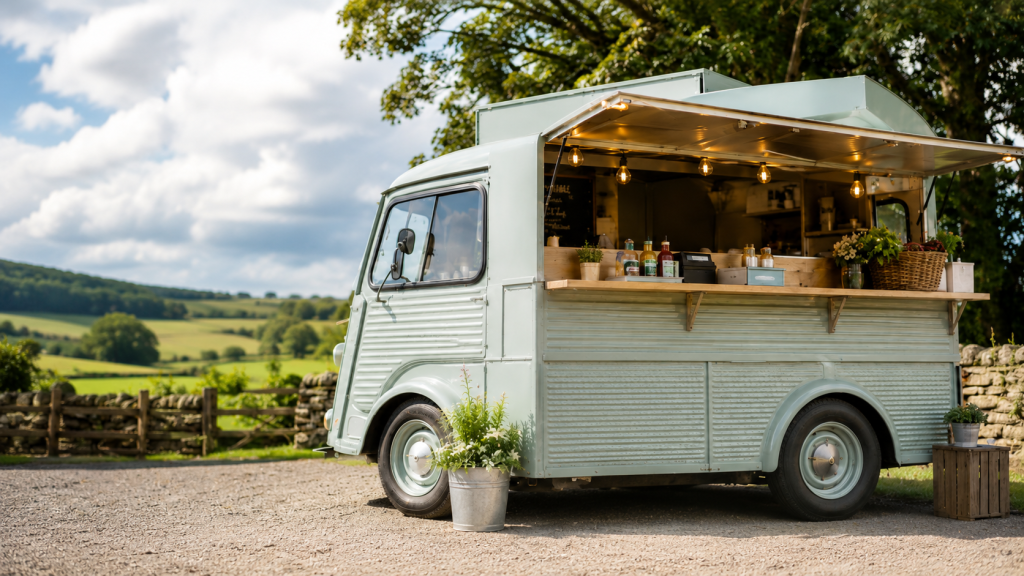
Mobile Catering Van Insurance: Protecting Your Business on the Road in 2026
How to start and run a mobile catering van business
A mobile catering van is one of the lower-cost ways to enter the food business. No lease on a commercial kitchen. No fixed address. Just a converted van, a menu, and the ability to show up where the customers are. The tradeoff is complexity. Getting the vehicle, equipment, permits, financing, and insurance right before the first service day takes more planning than most first-time operators expect.
Which mobile catering business model works best?
The business model shapes every other decision. A van serving a fixed lunch route to office parks operates differently from one doing weekend farmers’ markets or private events. Food trucks work well on busy urban streets with consistent foot traffic. Smaller vans are ideal for private events, corporate catering, and locations where parking a full truck would be impractical.
Before settling on a model, research what already exists in the target area. The market gap matters more than personal preference. A neighborhood with three burger trucks and no dedicated vegetarian option is a different opportunity than one already saturated with specialty food.
Scalability is worth thinking about early. Adding a second van later is easier if the first operation runs on documented systems rather than one person’s memory.
How should a catering van menu be designed?
Short menus outperform long ones in a mobile format. A confined kitchen with one or two operators cannot execute fifteen items well during a lunch rush. Five to eight items that travel well, cook fast, and hold temperature safely are a more realistic starting point.
Seasonal ingredients help differentiate the menu and control costs. Items that are slow to prepare, quick to spoil, or rarely ordered should be cut early. Test every menu item for speed and food safety before the first public service day, not during it.
What insurance does a mobile catering van business need?
A catering van is simultaneously a vehicle, a commercial kitchen, and a public-facing business. Most new operators think about the vehicle and the kitchen. The liability exposure from the public-facing side is where people get caught out.
Farmer Brown Insurance has been placing commercial coverage for food service businesses across all 50 states since 1996.
General liability is the starting point. It covers third-party bodily injury and property damage during operations. Most event organizers and private venues require proof of it before allowing a vendor on site, typically at least $1 million in coverage, and some ask for a Certificate of Insurance naming them as an Additional Insured. If a customer slips near the service window or equipment falls and damages property, general liability pays for medical costs, repairs, and legal defense.
Product liability is worth checking separately. Some general liability policies include it automatically. Others require it as an endorsement. It covers claims that food or beverages from the van caused illness, burns, or allergic reactions. A disputed foodborne illness incident generates legal costs even when the cause is never conclusively established.
Commercial auto is required in virtually every state for business vehicles. A personal auto policy will not respond to accidents while driving to events, hauling equipment, or transporting staff. One at-fault accident in an uninsured work vehicle means absorbing vehicle repairs, the other party’s medical bills, and any property damage out of pocket.
Workers’ compensation becomes a legal requirement in most states the moment the first employee is hired. Kitchen burns, cuts, and slips in tight spaces are common claims in food service. Average workers’ compensation claims in the industry run around $47,681. That figure changes the way the annual premium looks.
Equipment breakdown coverage protects refrigeration units and cooking equipment against mechanical failure. A refrigeration breakdown during a summer event can mean losing an entire day’s inventory. Inland marine coverage extends that protection to equipment in transit or stored off-site, which a standard property policy does not cover.
A Business Owners Policy bundles general liability and commercial property into one policy at a lower combined cost than buying each separately. For operators storing equipment at a fixed location between events, it is usually the most practical starting point.
Coverage needs shift as the business grows. A second vehicle, a new employee, or a new operating state all change what the policy needs to cover.
What vehicle and layout do catering vans need?
Vehicle size determines what equipment fits and where the van can legally park. A larger van or trailer offers more workspace but limits access to certain locations and complicates parking at events. The vehicle must meet local health department requirements for ventilation, food storage, and safety before any permit application is filed.
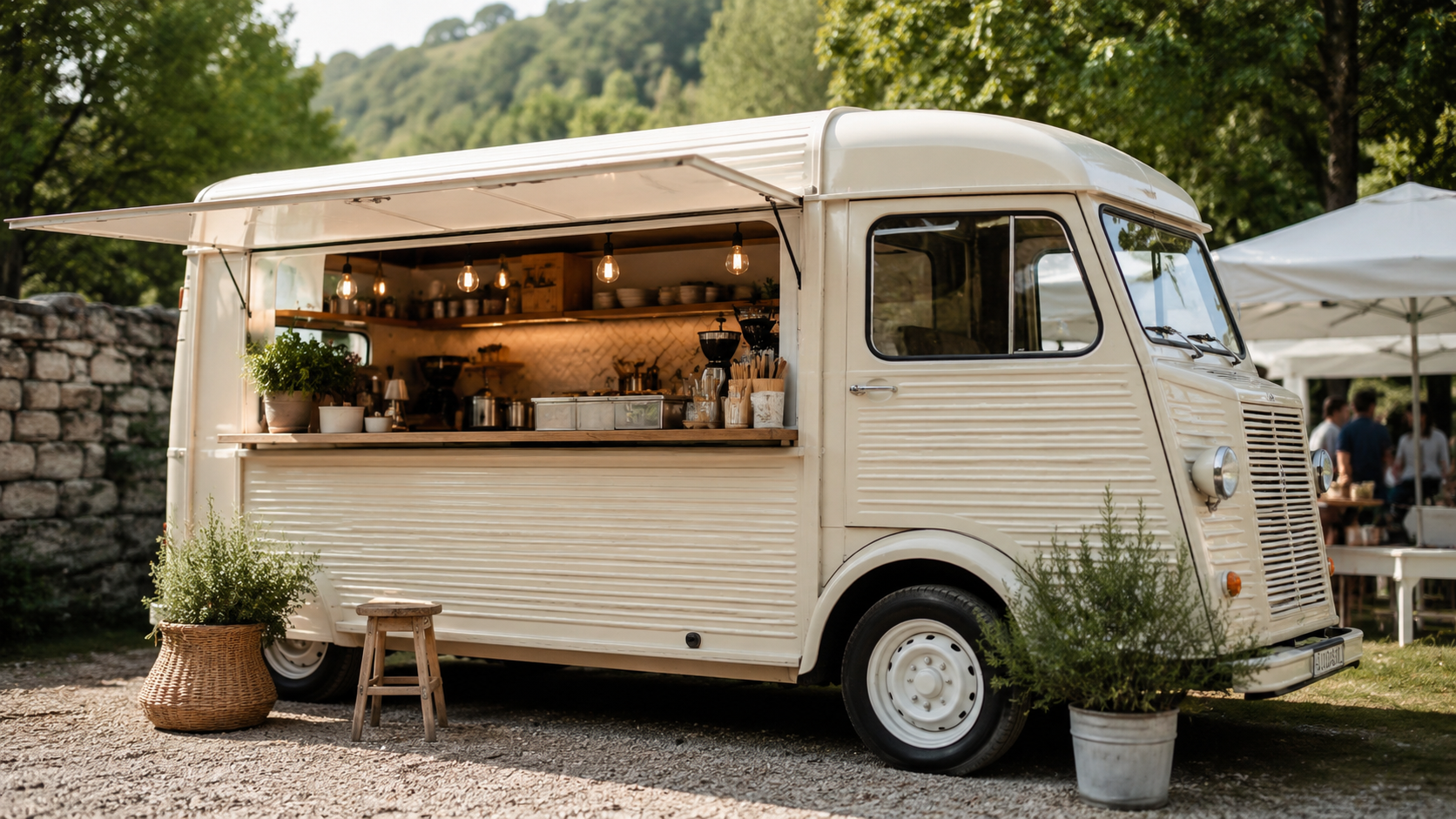
Interior layout should minimize movement during service. The grill, prep surface, and refrigeration should be within a few steps of each other. A pass-through window at counter height keeps the service line moving. Shelving and bins should be fixed, labeled, and accessible without bending or reaching overhead during a rush. Non-slip flooring and rounded countertop edges reduce the risk of injury during long shifts.
Equipment should match the menu, not exceed it. A combination oven saves space when the menu calls for both dry and moist heat. Quality refrigeration is non-negotiable since food safety failures are expensive in more ways than one.
How do you finance a mobile catering van?
New catering vans typically run between $50,000 and $200,000 depending on size and equipment. Used vehicles range from $20,000 to $100,000. Most lenders require a down payment of 10% to 30% depending on credit history.
| Financing option | Down payment | Monthly cost | Ownership | Key risk |
|---|---|---|---|---|
| Equipment loan | 10% to 20% | Fixed | Yes | Higher upfront cost |
| Lease | 0% to 10% | Low | No | No equity built |
| SBA loan | 10% to 30% | Fixed | Yes | Complex approval process |
| HELOC or cash-out refinance | Closing costs | Variable | Yes | Personal property at risk |
A written financial plan with projected revenue, monthly costs, and a break-even timeline makes any application process cleaner and the decision between these options clearer.
What ongoing costs do catering van operators carry?
Beyond the vehicle payment, monthly operating costs include fuel, routine maintenance, licenses and permit renewals, ingredient sourcing, and marketing. Food trucks average around 28.5% net margin before loan payments and repair costs, which means pricing needs to account for ingredient cost, labor, fuel, and overhead before a profit figure appears.
Ingredient prices shift seasonally. Menu prices should be reviewed regularly to protect margins rather than left unchanged until they become a problem.
Where should a catering van operate?
Location is the biggest revenue driver in this business.
Private events such as weddings, corporate functions, and birthday parties offer predictable booking revenue and often higher ticket sizes. Partnering with event planners builds a consistent calendar faster than any other method. Fixed-price packages make quoting easier for both sides and reduce back-and-forth on custom requests.
Public spaces bring volume. Parks, farmers’ markets, and city festivals regularly put the van in front of new customers, but each location has its own permit process. Some cities require applications weeks in advance. Showing up without the right paperwork means packing up and losing the day.
Business parks are underused by most operators. Office workers eat lunch on a schedule, which means a recurring slot with a predictable crowd. Coordinating directly with office managers or HR departments to lock in regular service days is more reliable than competing on open market days. Online pre-ordering removes the bottleneck of a long queue and makes the operation easier to staff.
How do operators future-proof a catering van?
Solar panels or auxiliary power sources cut fuel costs over time and attract customers who pay attention to sustainability. Induction cooktops and LED lighting use less power and last longer than older equipment. Some energy-efficient upgrades qualify for local grants or tax incentives worth checking before purchasing.
Tablet-based ordering and payment systems reduce errors and move lines faster. Inventory management software stops the problem of running out of a key ingredient mid-event. Customer feedback through QR codes or comment cards surfaces fixes that are not obvious from inside the van.
Stainless steel counters and food-safe plastics hold up to daily cleaning and meet health code requirements. Weatherproof exterior panels protect the workspace. Weekly checks on hinges, seals, and flooring catch wear before it turns into a repair bill that stops operations.
Getting covered before the first service day
Insurance should be in place before the van goes into service. A single uninsured claim, whether from a road accident, a foodborne illness dispute, or equipment theft, can cost more than several years of premiums combined.
Farmer Brown works with A-rated carriers, including Nationwide, Zurich, The Hartford, Travelers, and Liberty Mutual. Same-day coverage is available in most cases. Call (888) 973-0016 or request a quote online.