
Commercial Truck Insurance
Insurance for Trucking owner-operators

Commercial truck insurance for owner-operators and fleets
Trucking margins are thin. One bad accident without the right coverage and you are not just dealing with a claim. You are dealing with whether the business survives it.
Farmer Brown Insurance places commercial truck insurance for owner-operators and fleets across all 50 states. We work with A-rated carriers and get most policies issued the same day. Whether you run one truck or a fleet of nine, the coverage needs to fit the operation.
Get Instant Commercial Auto Insurance Quotes Right Now!
"*" indicates required fields
What type of insurance does a trucker need
Trucking insurance is not a single policy. It is a combination of coverages built around how you operate. An owner-operator leased to a carrier has different needs than one running under their own authority. What you haul, where you run, and whether you own or lease your equipment all affect what you need.
Primary liability
The FMCSA requires primary liability coverage, also called auto liability, for all carriers operating in interstate commerce. This covers bodily injury and property damage to third parties when you are at fault in an accident. It does not cover your own truck or your cargo.
Physical damage insurance
Covers repair or replacement of your truck from collision, theft, vandalism, fire, or weather damage. If you are financing your truck, your lender almost certainly requires it. If you own it outright, the decision comes down to what it would cost to replace the truck out of pocket.
Motor truck cargo insurance
Covers the freight you are hauling if it is lost, stolen, or damaged while in your care. Most shippers and brokers require proof of cargo coverage before they will assign a load. Coverage can also include cleanup costs for spilled cargo and in some policies the revenue you would have earned if the delivery had been completed.
Non-trucking liability insurance
Covers you when you use your truck for personal purposes while not under dispatch. Your primary liability policy only covers you when you are working for a carrier. Drive the truck to run a personal errand and cause an accident, and without this coverage, you have nothing.
Bobtail insurance
Covers you when you are driving your truck without a trailer, whether returning from a delivery or repositioning between loads. Bobtail coverage is different from non-trucking liability even though the two terms get used interchangeably. Bobtail covers you while operating without a trailer during the course of business. Non-trucking liability covers personal use. Many motor carriers require owner-operators to carry bobtail coverage as a condition of the lease. If you are not sure which one you need, the answer usually depends on whether you are on or off dispatch when the truck is moving without a trailer.
General liability insurance
Covers bodily injury and property damage that occur because of your business operations but are not directly related to driving your truck. Delivering a load to the wrong address and damaging the recipient's property, an employee causing damage at a loading dock, a driver getting into an incident off the road while on duty. These situations fall outside your auto policy and require a separate general liability policy.
Medical payments
Covers medical bills for you and any passengers in the cab after an accident, regardless of who was at fault. On long hauls where a co-driver or helper is riding along, this coverage matters more than most owner-operators realize until they need it.
Is Trucking Insurance required?
Yes. The FMCSA requires primary liability insurance for any carrier operating in interstate commerce. States also have their own requirements for intrastate operations. Operating without required coverage can result in loss of operating authority, fines, and personal liability for any claims that occur while uninsured.
Beyond the legal requirement, contracts with brokers, shippers, and load boards typically specify insurance requirements that exceed the FMCSA minimums. If your certificate does not show the required limits, you do not get the load.
FMCSA minimum insurance requirements
The Federal Motor Carrier Safety Administration sets the minimum liability coverage required to operate in interstate commerce. These are floors, not recommendations. Contracts with shippers and brokers frequently require higher limits than the FMCSA minimums.
Non-hazardous cargo, trucks over 10,001 pounds:
The FMCSA requires coverage of at least $750,000 for trucks that weigh more than 10,001 pounds. You must meet this rule if you will carry Non-Hazardous Cargo across State lines.
Carriers of hazardous materials
The FMCSA requires higher limits if you will transport hazardous materials. These coverage limits apply to carriers of all materials the DOT deems hazardous. The FMCSA requires insurance coverage of at least $5 million if you transport hazardous materials. These requirements apply to all truck weight classes. This applies to transport between countries, intrastate, and interstate.
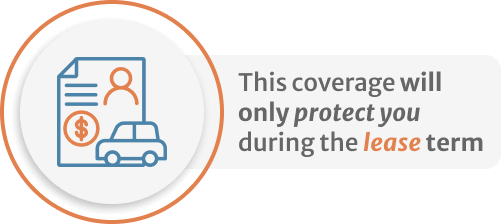
If your truck is under a lease arrangement with a carrier, that carrier’s insurance typically covers you while you are under dispatch. It does not cover you during personal use or when you are bobtailing between assignments. Understand exactly when your carrier’s coverage applies and where the gaps are before you decide what additional coverage you need.
Full FMCSA requirements are available at fmcsa.dot.gov.
Commercial truck insurance requirements
Your minimum required Commercial Truck Insurance limit depends on the type of freight you haul.
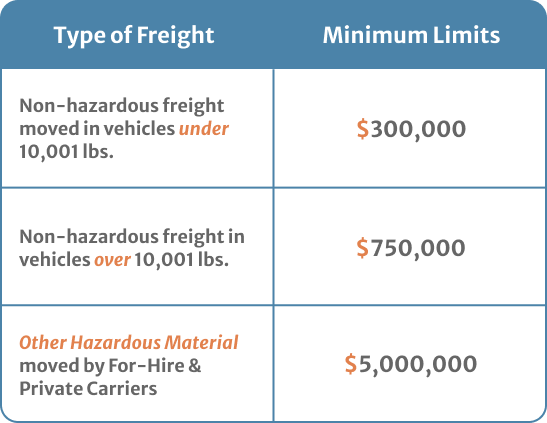
These are just the minimums required by law. These amounts might not be right for your situation. Only after discussing your situation with an experienced agent, they will help you determine what limits are right for you. Also, remember that any contracts you have may require you to purchase limits higher then what is stated here.
How much does commercial truck insurance cost in 2026
The cost depends on your operating authority, the type of freight you haul, your driving record, the value of your truck, and where you run. Some carriers also offer up to a 5% premium discount when you share telematics data, which tracks driving behavior and route patterns.
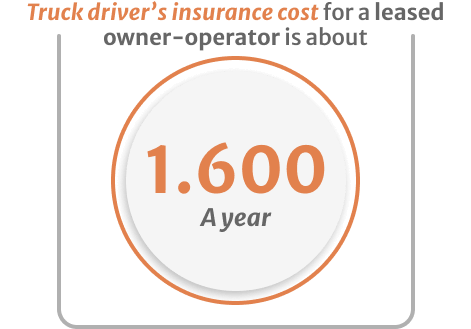
The value of your truck is an important component. New and more expensive trucks will increase your overall rates compared to a truck owner with a similar situation and a lower cost truck.
How much does trucker’s tractor-trailer insurance cost
Tractor-trailer insurance covers the risks of operating a tractor-trailer. Accidents involving a tractor-trailer can cause major property damage to your cargo, property, and third parties’ property. Further, if people are involved in the accident there is a good chance you will be hit with personal injury lawsuits.
It is imperative for you to choose the right insurance for your truck and trailer. This will protect you from the medical, repair bills, and the cost of your legal defense for covered claims. You also can get protection from uninsured drivers.
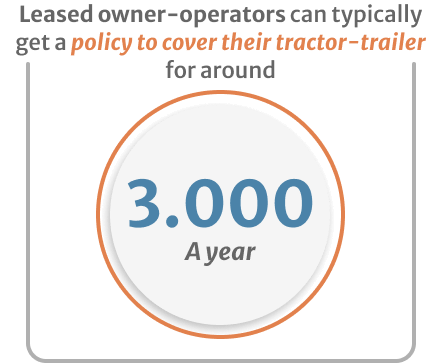
Leased owner-operators can typically get a policy to cover their tractor-trailer for around $3,000 a year. This cost can change dramatically depending on the type of truck, driving record, area of operation, and types of cargo hauled.
How much is Trucker’s Insurance for an owner-operator?
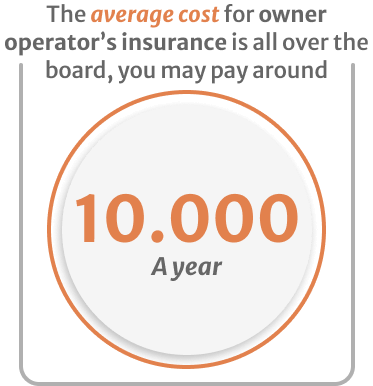
The average cost for owner operator’s insurance is all over the board. If you have your own authority, you may pay around $10,000 a year.
This cost can depend on a wide variety of factors. The factors are pretty much the same to determine the price as the other types of insurance. These are:
- Type and price of the Truck
- Your driving record
- Type of cargo hauled
- Your geographic area of operation
- Your age and credit score
- Amount of coverage required.
Give one of the agents at FramerBrown.com a call and they can get you a more exact quote based upon your unique situation. It will only take a few minutes and could save you thousands of dollars.
What drives your premium up or down
Driving record. Moving violations, accidents, and prior claims all raise the rate. A clean MVR is the single most effective way to keep trucking insurance affordable. Carriers that invest in ongoing safety training see fewer incidents and lower rates over time.
Type of cargo. Household goods, hazardous materials, refrigerated commodities, and high-value freight all carry higher rates than dry van general freight. Specialty cargo requires specialty coverage.
Geographic territory. Carriers running in the Northeast or California typically pay more than those running in the Southeast or Midwest. Urban delivery routes generate more frequent claims than long-haul interstate runs.
Truck value. A newer or more expensive truck costs more to insure for physical damage than an older truck with lower replacement value.
Credit score. Many trucking insurance carriers factor personal credit into the rate for owner-operators. Better credit generally means lower premiums.
Operating authority. Running under your own authority versus leasing to a carrier affects both the coverage requirements and the cost significantly.
Fatigued driving. Carriers with documented hours-of-service compliance programs and electronic logging device data often receive better underwriting treatment than those without. Fatigued driving is one of the top causes of serious trucking accidents.
Why Farmer Brown for commercial truck insurance
Most general insurance agents fumble trucking. The FMCSA filings alone trip people up. We have done this long enough to know which carriers actually write it well and which ones add the exclusions back in after you sign. The bobtail versus non-trucking distinction, the owner-authority versus leased-operator structure, the cargo endorsements that matter by commodity. A lot of agents skip the details and the trucker finds out when a claim gets denied.

If you have been declined elsewhere or got a policy that felt thin, that is worth a second conversation. We cover all 50 states, issue same-day certificates at no charge, and quote the full program together so you see what it actually costs before you commit.

Want to know everything about Contractors Insurance with updated information?
This E-book is for you!
Still Have Questions?

Find Us NOW!
We are located at 21750 Hardy Oak Blvd Ste. San Antonio, TX, 78258

Frequently Asked Questions
A place to find all the answers

Speak With an Agent Now
Let's see how we can help you